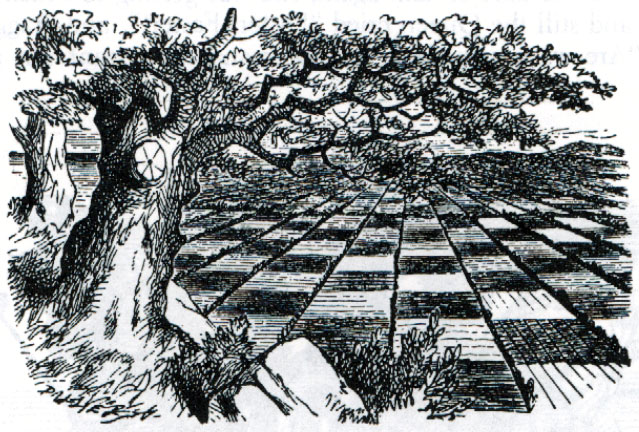
It should be known that thanks to Room on Fire, my favorite Stroke's album, I do actually stop and tell myself "Life ain't chess" when I am freaking out (frequently) about this or that. And it totally soothes. The imagery is perfect: I imagine the chess board set and laid out in front of me as I scrutinize and try to plan my next move. The futility of the scene is exaggerated by the fact that I don't know how to play chess. Like, at all. Most of what I know I learned from Harry Potter and let's be honest, so did you. Naturally, in a jest slightly more vehement than throwing up my hands in the air, I imagine myself knocking the chess board off those dainty chess tables and watching it fall to the ground, a storm of black and white. "Life ain't chess". With such violent imaginings (I love this word, by the way) it should come as no surprise to those who know me well that this kind of phantom role playing should soothe me.
The irony is perhaps that other thing that helps me in moments of wannabe crisis is repeating what M's mom says: "Am I on fire? No." Which is to say that I'm not a gonner (yet) and so not only could things be worse, but I am in a place to stop all the inward worry and turn it to outward action and make things better. Maybe I should, in honor of Julien Casablancas, rephrase that one: Am I in a room on fire? No.
Oh Julien.
Today's post is a direct result of my being a self-help book junkie. I'm not going to divulge the book I found myself reading (in my defense, it came to me through a set of old books someone asked me to go through and take what tempted me) but I'll indicate that the title of the chapter is: Get Comfortable Not Knowing. I'm just going to type it in here and let it speak for itself. As for me, I will now be adding the mantra "maybe so, maybe not". Third [mantra] is the charm, right?
"There once was a village that had among its people a very wise old man. The villagers trusted this man to provide them answers to their questions and concerns.
One day, a farmer from the village went to the wise man and said in a frantic tone, "Wise man, help me. A horrible thing has happened. My ox has died and I have no animal to help me plow my field! Isn't this the worst thing that could have possible happened?" The wise old man replied, "Maybe so, maybe not." The man hurried back to the village and reported to his neighbors that the wise man had gone mad. Surely this was the worst thing that could have happened. Why couldn't he see this?
The very next day, however, a strong, young horse was seen near the man's farm. Because the man had no ox to rely on, he had the idea to catch the horse to replace his ox-and he dd. How joyful the farmer was. Plowing the field had never been easier. He went back to the wise man to apologize. "You were right, wise man. Losing my ox wasn't the worst thing that could have happened. It was a blessing in disguise! I never would have captured my new horse had that not happened. You must agree that this is the best thing that could have happened." The wise man replied once again, "Maybe so, maybe not." Not again, thought the farmer. Surely the wise man had gone mad now.
But. once again, the farmer did not know what was to happen. A few days later the farmer's son was riding the horse and was thrown off. He broke his leg and would not be able to help with the crop. Oh no, thought the man. Now we will starve to death. Once again, the farmer went to the wise man. This time he said, "How did you know that capturing my horse was not a good thing? You were right again. My son is injured and won't be able to help with the crop. This time I'm sure that this is the worse thing that could have possible happened. You must agree this time." But, just as he had done before, the wise man looked at the farmer and in a compassionate tone replied once again, "Maybe so, maybe not". Enraged that the wise man could be so ignorant, the farmer stormed back to the village.
The next day troops arrived to take every able-bodied man to the war that had just broken out. The farmer's son was the only young man in the village who didn't have to go. He would live, while the others would surely die.
The moral of the story: If we keep our cool and stay open to possibilities, we can be reasonably certain that, eventually, all will be well.


