Search This Blog

Saturday, October 13, 2012

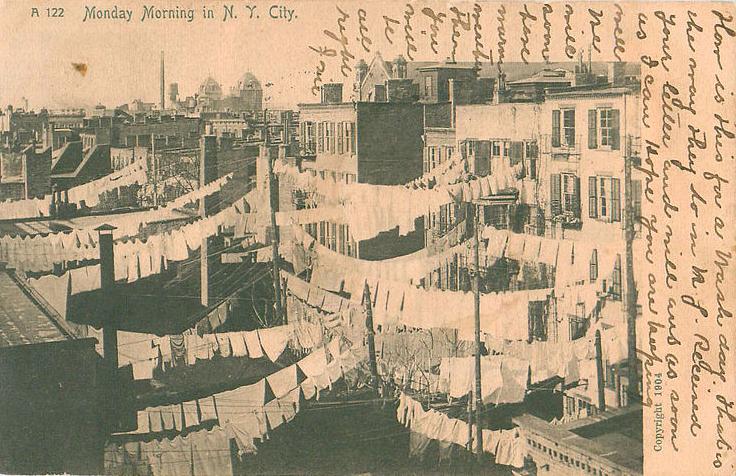
a clothesline summer

The mornings have gotten chilly and the nights undeniably cozy. Not to mention the turning of the leaves. I guess this means my fabulous summer is really, truly over.

I wrote this a few weeks back, in a matter of minutes, actually (more rare than not). When summer was still lingering and homework was looming over my head. More a result of procrastination than creative genius, there were a few words that still needed tweaking. The ushering in of fall helped me put in the final touches. One day, I wil write poems in French. The humming of my summer isn't complete without French sounds.       But.  That day is not today.

And so. An ode; or a eulogy, if you will.

a clothesline summer
minutes like postcard stamps
hung out to fly
then passed from hand to hand
in warmth not quite
cold nights not quietly
we danced on toes
we crossed out bridges
on pages, over seas

how can one know
without the swelling of the wind
makes windows call
gives voice to cracks and alleys thin
that doorknobs do
that from dark keyholes sing
the peace of home
a bed for backs so wearily

those dog-eared maps
which from the folds we found
like unwound twine
foreign knots to mark our feet
or rather where
and from beneath our skin
we carved out stone
and there stopped our searching


to understand
to live forgetfully
in ink that fades
according to the rain
in vacancies
left by what once words did fill
our mouths without
in teeming streets
from which a certain humming sounds


Thursday, September 20, 2012

Regret...? Now that's a foreign sentiment.

Remember how I usually travel and then blog about it?

Yeah, well this summer was the summer that I forgot about the blogging part. I was too busy with emails and skyping. Two words: big mistake.

I came home from my time abroad to realize that I was supposed to be keeping a journal. For 6 weeks. And then turn it in for a grade.

WHAAAAAAAAAAAAAAAAAAAAAAATTTTTTTTTT?

That was my reaction. Plus a whole lot of less nice words, mostly aimed at inanimate objects but some at my professor for not spelling it out for the space-cadet that is me and some aimed at said space-cadet.

 So I have made up for the last 2 years of failed blogging by writing 30+ pages of this travel journal. Which, if it were in paper form, I would want to set fire to, I'm so sick of it. The writing is horrible while some of the sentiments seek for sincerity. But I think my chief difficulty is that I didn't write it in the moment and I know that something is lost. And that I have a deadline and can't give it the nostalgic embellishments that I would like to.

Part of it may end up published, nonetheless. They might even get nice little pictures with caption.

But in the meantime, a word of advice:
Pulling together a daily journal months after the fact = la galère. So just don't do it. Especially if you go to France and it changes your life. Which, is gonna happen. Obviously. 

Sunday, July 15, 2012

A variation on the theme of solidarity


I know I already wrote about the idea of solidarity. I defined it as the elderly French would. I defined it by what it wasn't. 

But I have to say my piece. 

Perhaps their definition of solidarity is dead. Perhaps solidarity needs to be redefined, or perhaps in order to be found it needs to be actively, humbly sought out. 

Here is why I believe that solidarity is not as dead as some Parisiens would have me believe. Here is why I believe that all those stories you hear about Pariesiens unwilling to talk to you, help you, look at you, are misunderstood. (And before I begin, as a disclaimer, I do realize that being able to actually speak French is the golden open-sesame here.  But I still believe that if you expect solidarity, you will find it. And visa-versa.)

So, remember how, 3 years ago when I came to Paris I was on this 'independent women' kick that I failed miserably at? Well, this time around, I'm welcoming that failure with open arms. Perhaps it is because I have undoubtedly had that experience abroad where I had to sink or swim and I have, by now, more or less learned to swim. In the past, I lived alone, without cell phones, without the internet. I couldn't understand half of what people said to me and communicated much less than that. I had to figure out a lot of stuff by trial and error. I got lost almost constantly.  

This time around, I don't need to not need people. I have been thinking about all the people I've asked for direction in the past 2 weeks. I've had people draw me maps and miss their bus to see that I was well on my way. All the people whose advice I've solicited about my tourist adventures. The people who have helped me with my bags, who knew my name before I even got here, who have prevented me from slipping in puddles as I get off the metro because I am too busy minding the gap. The people who try to save me from gluten in my food, who want to go shopping, to cafés, lunch and dinner when we have only just met. 

I don't know about solidarity, but I do know that this time around, I love traveling because it reminds me that man is not an island. And while I don't like how much I sometimes feel like a child because that means that I'm less fit to give to others when I'm so busy recieving, I am glad for these moments that I am forced to remember how much we need each other. 

I guess to wrap things up I'll share one more thing: today my old-acquaintance-turned-new-friend Emily who happens to be in Paris this summer as well (more later on just how small this world really is) and I went to le cimetière du Père-Lachaise, Paris's largest and world famous cemetery. We only had two hours which was not nearly enough time and will probably be making it a Sunday afternoon ritual. It's hard to describe in words how enchanting it is. It's like a mini city, a curious skyline. It is ironic, perhaps, that after all my thoughts on family and community I should find myself here. Maybe that is why I have always loved cemetaries: in their own sombre way, they bring people together in love. 

This cemetary is full of gorgeous sculptures (more than any other cemetary I've been in), which, it should be known, are the things I spend all my time looking at when I'm at the Louvre, I can't get enough of them.

Basically, I saw this. And it was beautiful. 


I'll do my best to translate though it is essential to know that bruler les étapes means literally to burn through the steps, to skip ahead, to jump the gun, put the horse before the cart. But the verb burn is kind of essential for the juxtaposition of temperature in the imagery:

did i skip 
over any steps
one single 
step 
did i shine
with a thousand
burning stars
and already cold
did i only
live
as a water
which runs
and goes by 
without knowing
that it will return
for your thirst
and my thirst

I tried to translate it on the spot for Emily and we tried to interpret it as we were getting kicked out of the cemetery. We said it reminded us of other poems we knew, me of Robert Frost's "Fire and Ice"

Some say the world will end in fire; 
Some say in ice. 
From what I've tasted of desire 
I hold with those who favor fire. 
But if it had to perish twice, 
I think I know enough of hate 
To say that for destruction ice 
Is also great 
And would suffice.


And her of one of Oscar Wilde's (who is also buried there but who we have yet to find). She wasn't sure which poem, and maybe it was actually the same one as me. But maybe it's this one, Panthea:

Nay, let us walk from fire unto fire,
From passionate pain to deadlier delight,--
I am too young to live without desire,
Too young art thou to waste this summer night
Asking those idle questions which of old
Man sought of seer and oracle, and no reply was told.
.....
(there is more. somuchmore)

So there you have it, some beautiful thoughts to wrap up the day.

One more look before at the Eiffel Tour outside my window. Ahhh, Paris.

Je t'aime. 

Wednesday, July 11, 2012

sol·i·dar·i·ty /ˌsäləˈde(ə)ritē/


I've been thinking a lot about this theme of solidarity. It's a word I've heard probably five times since I've been here and I doubt that I've heard the last of it. Mostly when I hear the word it is in the context of that which is lacking. I hope I can get a better grasp on the situation so that I can write more on it. 

If memory serves me well, Madame Marechal mentioned it first. She had fallen in her appartement building and was crying for help. For hours. No one came to help her (though I wonder if in fact anyone actually heard her). If it wasn't for her femme de ménage, she might have died from such a fall. 

In telling me the story, her eyes welled up. Not quite out of sorrow, no. Though this is is a woman who had a difficult childhood and has seen her share of sorrows, real or imagined.  

Most of the people we visit seem to have similar pain in looking too far back. And yet they are forever looking back. It makes me wonder about our tendency to hold onto the difficulties in our past, to immortalize and martyrize, to define ourselves by the scars we carry so that we can also boast of the strength that now animates our limbs. Can there be any joy in strength if it was not won with some difficulty? Is this the price we pay for opposition, that we risk losing ourselves to those scars? People all bear their scars differently: some quietly, some defiantly, and others with a vendetta that turns upon itself. Some manage to be matter of fact. In the narration they cast of their lives, those scars are facts, events: proof that they have lived. Not axes on which their whole lives turn.

Madame M. was unloved by her father and resents her mother's lack of backbone, which undoubtedly explains her very dominant personality . Madame C. was abandoned from what I understand, to be later taken in by a family who beat her, the father especially. When we talk to her, there is almost nothing that interests her now or that interested her ever. Nothing to distract her from that cankerous past. Monsieur B's father disowned him when he wanted to leave for Paris to be an actor. When he got a divorce, he gave his wife everything but she took more. And his only daughter has never forgiven him. Madame F doesn't want to talk about her life. She can't walk anymore and is, in her own words, waiting to die. She has been waiting a long time. Madame CB is 102 and is loosing her sight. She is the most spritely of them all, always glowing. But she can't help to hide the disappointment she feels that after everyone she took care of, visited with, or was just aware of, it is astonishing to her how forgotten she is and how she must deal with things on her own. 

Still, I think it is telling that some, even most of these people here, prefer looking to their tragic pasts rather than in the present and even less to the future. Is aging really so horrible that people would prefer to reliving, again and again, the wrongs that have been done them as a way to distract themselves from the reality of their current situation? Why not relive the positive? The beautiful? Why are they the moments that are harder, that take more work, to hold onto. Ironically, I feel as though sometimes the latter brings more pain. Because all those wonderful memories are tied up in people, places, moments that are irrevocably gone.


But, I digress. I want to paint for you what I mean, what the French mean by 'solidarity'. Back to Madame M. This is a woman wins people over, herself included, with a fiery sense of humor. She is opinionated and anything but mild. Like me, tears come when emotions are high: any emotion. But as she was talking to me, these were tears of frustration and something stronger. Because she is a raw ball of passion, her hands were clenched as she said to me, her face tightened by desperation nearing rage, that solidarity in France is dead. 

She has too many examples, though she names a few.  The things that solidarity is not: being ignorant about who your neighbors are, not looking  after others or picking up after yourself, not letting the elderly have the seats on the buses or metro, not caring to get to know them, walking around with headphones on, making a person ask for help, which is perhaps only slightly less worse than ignoring that cry for help because it is someone else's problem.

I suppose it could be my ignorance or it could be a result of having been raised in the church, but this pain of aging, and especially the crushing solitude, is a foreign concept to me. I don't want to undermine the reality of this pain in trying to figure out to what extent this portrait of aging is accurate but unappreciated and unknown by those too young to live it and to what extent it is a cultural phenomenon. I can't help but think that the death of solidarity came with the death of general religious belief in Europe. Because the people I work with from Africa of muslin background or other, they still have that solidarity, though perhaps not to the extent they experience it back in their homeland. Not to mention that the fear of death is partnered with a peace in the hope of an afterlife.

If I could put their plight succinctly, this lack of solidarity is most likely due to a lack of family, and a need for community-the kind that you don't age out of. 

I think that probably of all the takeaways from this time abroad, this awareness will be the biggest for me. We are all part of families and we can all take an active or passive role within that family. The same thing goes for communities.  Sometimes I think I take for granted having people around me that I can "need from" and people that need me. I just hope I learn to hear the silent pleas for help of those around me, or, even better, to learn to give before the asking words have even been spoken. 

Sunday, July 8, 2012

Forever is composed of nows: Part II


Things that I have "learned" about Paris:

I know that Rennes, where I spent 5 months in 2004, is no metropolitan. I know this. And that is why I love it and want to go back. All the same-and I can't help but to compare-I am so surprised by the presence of English in Paris. I hear it ALL the time. I see Brits and Yanks right and left. It is tourist season, yes. I am aware of that. But this impression began in Switzerland even. I couldn't believe being able to get along without honestly knowing a lick of German. To be honest, it is kind of sad. 

When I lived in Rennes, I spent 5 quite silent months amongst anyone who wasn't a foreign, English speaking student. I had to. There were a few Frenchies who had done studies abroad to England or the States, but it was mostly Americans and Irish that I hung around if I wanted to communicate at all. One in ten of us had a cell phone. Internet only existed in the campus library and at internet cafés. It may be unfair of me to compare a Rennes of 8 years ago to a Paris of today, but I can't help but feeling as though I have been witness to a huge cultural shifting. Globalization through the internet and the media has happened, right before my eyes. Of course kids still learn English at school as they have been for the past 30 something years. But I think it is safe to say that in the last 10 years or so, everything has changed. And is still.changing. Culturally, linguistically. It's kind of sad. I come to France to experience a culture and a history that is different from my own. That gap between French and American mentality, so impassive, I wonder if it will always remain that way. I don't want our cultures to understand one another simply because one has obliterated the other. Perhaps that is dramatic. Perhaps we'll give it another 10 years and see.

My internship here entails two kinds of work: setting up visits with old people who are lonely and need the company or someone to accompany them on little outings, and biweekly meetings with a group who have come from hard times and few means and have made a sort of family for themselves amongst others like them. I'll be talking a lot more about my work, schedule, visits, and of course, the people, for the rest of my stay here. For the sake of this topic however, I'm gonna just limit myself to one anecdote.

Three days of the week I spend my afternoons doing visits with Carin. You will likely hear much more about her. She is, I believe, somewhere in her 60's, from the Netherlands, and a French Professor. She has come here for 3 weeks, leaving behind her husband as she has done the past 3 years to come here and renew her French. She is fiercely independant, gets around on a bike, goes to concerts almost nightly, has a beautiful singing voice and a way with the people here. Perhaps needless to say, she is already likely to be one of my heroes. In any case, we had a visit Friday. The woman we visited, Mme Marechal, collected books of French culture, mostly about impressionism. She knew so much but the craziest thing is she has never traveled. Ever! Anyway, she uses art as a kind of therapy to help her deal with the solitude, but, most especially, the lack of solidarity she feels and the changes in the country. The city she grew up in and has lived in most of her life is such a different place. It has evolved, not just with the effects of time on her culture, but by other cultures on her culture. In case you aren't aware, immigration is a huge phenomenon in Europe. I should google some statistics but I'm feeling lazy. What I do know is that 8.1% of the French population are immigrants. What I also suppose is that most of these immigrants live in the larger cities: donc, Paris et Marseille. 

I think the best way to summarize is using Carin's words, which she used to help me understand Mme. M's distress. Carin watched after her mother, who recently passed, go through a similar struggle: in the Netherlands, there are entire neighborhoods which are now entirely full of immigrants. Natives no longer live there. But all this has happened only over the past 20 years or so. Which translates a lot of change in only a short amount of time. And the older generation, the ones who shaped the cities as we have them today in many ways, are too old to move away out of such neighborhoods. Or it doesn't make sense for them to. But it takes so much energy for them to live, that tackling this unfamiliar is a daunting task. And so they live further isolated, not just by age but by culture. 

So in summary, I am beginning to see how Paris, this city that I love for its age and richness of history, is also a city that encapsulates change. It's a striking juxtaposition.

Tuesday, July 3, 2012

Forever is composed of nows.

Things I forgot about Paris:

1) it is HUGE. 

My parents would hate it. Having come from the quaintness of the Swiss Alps,  I am inclined to agree with them. Former time spent in Paris (a handful of days in 2004 and an evening and morning in transit in 2009) were spent, naturally, as a tourist. I didn't wander far from the city's heart as there wasn't much of a need. And even if I had, I probably took its oceanic span for granted. You can't appreciate the stretching of the strands of metro lines, metro cars overflowing at nearly all hours, this vitality, and the noise which never sleeps, the pockets of "Places"-monuments, parcs, shops, mini centers in their own rights-until you have inhabited Paris. That these things exist, and what's more not as part of your tourist adventure but as every day life is, or at least has been in my case, uncomprehensible until they make up part of your everyday life. And so, perhaps I forgot it's size. But perhaps I am also finally learning it for the first time. 

2) ça pue! 

And I mean, it REALLY smells. The French, bless their hearts, have two verbs for "smell" One you might use to describe the smell of food- pastries, pizzas, kebabs, café-that of course make the Paris experience complete. That is the verb 'sentir'. That same verb could be used to describe perfume, wine, and cigarettes, the other scents that register as being typically French (the last two especially for me). But, you will notice, that is not verb I used. The second verb is 'puer', which IS the verb I used and which means, quite simply, to reek. Obviously the English language has two verbs to describe smells as well. But whereas reek is probably not part of the common vernacular, puer totally is. 

So what smells? Well, the Metros, mostly. So much so that if you type ça pue into google you get this article which comes up first. The title, basically: Why on earth does it smell so awful in the metros of Paris. Yeah. I've actually been meaning to look that up. Turns out that rotten eggs smell has already been officially acknowedged. And analyzed and tested in fact. But besides the rotten egg smell you've got the smell of urine. Skimming the article indicates it's cat urine. I know better. My days in Rennes served as amply proof that the French don't use bathrooms. At least not the men. Any bush, wall, door or the 8 inches between paralell parked cars can serve as an appropriate spot to let nature take its course. I am quite positive that the Metro would be no exception, though I have yet to see with my own eyes. I'm not really keen to be proven right in this case though so let's just hope you have to take my hypothetical word for it. 

This tradition of peeing in public spaces is a long standing one. One of the few things I retained from highschool French days was my teacher recounting how horrible some of the old castles, manors, museums, etc (can we say Versailles?) still smell to this day because the corridors were used as bathrooms. I don't know how elaborately Madame went into detail while informing us of this, but I do know that I had and still have a very elaborately clear picture in my head of Marie Antoinette and her entourage lifting their skirts to the wall on the north while the men took care of things on the wall to the south. I'll admit, I was a pretty prissy, prude student back then. So if that was one of probably 5 things I retained from highschool French (one of the other involves Catherin Medici, cupboards, and poison, though I can't remember how they relate) you can understand why 1) I am now convinced that students will only actually remember the things that aren't important or that you mention in passing and don't really want them to remember, especially highschool students and so 2) I have no desire to teach highschool French 3) but if I were to teach I would collect every stereotypical-bordering-on-complete-mythological story so that at least my kids would have nourished their imaginations because I have little hope of getting them to remember verb conjugaisons. Which probably makes me a horrible teacher. But only hypothetically. And only for highschool students. Incidentally, I have no desire to google and confirm this supposed pee tradition. I'll take the fiction. 

My friends thought it was funny when I came back from Rennes trying to explain to them that the woman holding her small dog on a leash wasn't a stereotype. It was real, dang it. When people think of Paris they think of the city of lights, naturally. But really, it's a city of hundreds, nay thousands of small dogs. This very day in fact I saw this girl walking with hers. Upon arriving at an intersection (I don't know why the intersection was any more dangerous than the sidewalk but that is her affair), she swooped him up with a practiced flick of a wrist. No more than that, I swear, and she was carrying him with her across the dangerous busy sweet. In case you were wondering, the thing probably weighed about the same as my lunch. And he was on a harnass.

But the thing is, this city of small dogs is also a city of small dog excrement and wee puddles. The small factor is significant because it makes it harder to see and thus harder to avoid. Except when it rains. And then it expands. And runs. And, well, you get the smelly picture. 

And well then of course you have the smell of humans in tight, warm quarters. Some of whom have loosened standards of hygiene comparatively. I'll just leave it at that. I don't know why this is something that always surprises me. But it does. Everything is so sterile where I live. Where most of us live, I imagine. Paris gets me feeling OCD when I think about all the filthy things I come in contact with throughout the day. The pollution and cigarette smoke itself has me taking out my contacts once, if not twice a day to remove irritating particles and whatnot that cling relentlessly to my lenses. Sometimes it is refreshing to be reminded that we are more like animals than the machines we've allowed to take over our lives. The word 'animal' can have a really derogatory association. I don't mean it that way. I mean it in the way that animals are sentient, that they are free (I know I'm romanticising) and that they are almost always in communities. That's all. 

(I don't mean to start out with the unpleasant things. It's just that sometimes, those are the sensations that hit the hardest, and somehow, end of carrying the essence of everything else. And everything else is pretty magical. So much so that I don't know where to start.)

3) la musique!  

In a word: accordians. But also, so much more. Mostly on the metros, often on the streets. I don't know how the Parisians feel about it but I love the bombardment of live music as I travel. It's magical, simply that.

4) red is relative

I think this a phenomenon common to most large European cities, but I had forgotten and am quickly relearning the fact that a street is fair game, no matter what color that little walking man is. Pedestrians here aren't just assertive, they are plain rebellious. But no one seems to really mind. The expression 'share the road' (which I can never here without Samwise's voice in my head) is never more true. Cars are definitely keen to share the road to pedestrians, ever ready to yield in case of overly zealous rebel. But by 'road' they mean the foot-wide perimeter of space around you. No need to have your life flash before your eyes 15 times a day. Keep calm and carry on. 


Things that I have "learned" about Paris:

I know that Rennes, where I spent 5 months in 2004, is no metropolitan. I know this. And that is why I love it and want to go back. All the same-and I can't help but to compare-I am so surprised by the presence of English in Paris. I hear it ALL the time. I see Brits and Yanks right and left. It is tourist season, yes. I am aware of that. But this impression began in Switzerland even. I couldn't believe being able to get along without honestly knowing a lick of German. To be honest, it is kind of sad. 

When I lived in Rennes, I spent 5 quite silent months amongst anyone who wasn't a foreign, English speaking student. I had to. There were a few Frenchies who had done studies abroad to England or the States, but it was mostly Americans and Irish that I hung around if I wanted to communicate at all. One in ten of us had a cell phone. Internet only existed in the campus library and at internet cafés. It may be unfair of me to compare a Rennes of 8 years ago to a Paris of today, but I can't help but feeling as though I have been witness to a huge cultural shifting. Globalization through the internet and the media has happened, right before my eyes. Of course kids still learn English at school as they have been for the past 30 something years. But I think it is safe to say that in the last 10 years or so, everything has changed. And is still.changing. Culturally, linguistically. It's kind of sad. I come to France to experience a culture and a history that is different from my own. That gap between French and American mentality, so impassive, I wonder if it will always remain that way. I don't want our cultures to understand one another simply because one has obliterated the other. Perhaps that is dramatic. Perhaps we'll give it another 10 years and see.

My internship here entails two kinds of work: setting up visits with old people who are lonely and need the company or someone to accompany them on little outings, and biweekly meetings with a group who have come from hard times and few means and have made a sort of family for themselves amongst others like them. I'll be talking a lot more about my work, schedule, visits, and of course, the people, for the rest of my stay here. For the sake of this topic however, I'm gonna just limit myself to one anecdote.

Three days of the week I spend my afternoons doing visits with Carin. You will likely hear much more about her. She is, I believe, somewhere in her 60's, from the Netherlands, and a French Professor. She has come here for 3 weeks, leaving behind her husband as she has done the past 3 years to come here and renew her French. She is fiercely independant, gets around on a bike, goes to concerts almost nightly, has a beautiful singing voice and a way with the people here, and is already like to be one of my heroes. In any case, we had a visit Friday. The woman we visited, Mme M, collected books of French culture, mostly about impressionism. She knew so much but the craziest thing is she has never traveled. Ever! Anyway, she uses art as a kind of therapy to help her deal with the solitude, but, most especially, the lack of solidarity she feels and the changes in the country. The city she grew up in and has lived in most of her life is such a different place. It has evolved, not just with the effects of time on her culture, but by other cultures on her culture. In case you aren't aware, immigration is a huge phenomenon in Europe. I should google some statistics but I'm feeling lazy. I think the best way to summarize is using Carin's words, which she used to help me understand Mme. M's distress. Carin watched her mother, who recently passed, go through a similar struggle: In the Netherlands, there are entire neighborhoods which are now entirely full of immigrants. Natives no longer live there. But all this has happened only over the past 20 years or so. Which translates a lot of change in only a short amount of time. And the older generation, the ones who shaped the cities as we have them today in many ways, are too old to move away out of such neighborhoods. Or it doesn't make sense for them to. But it takes so much energy for them to live, that tackling this unfamiliar is a daunting task. And so they live further isolated, not just by age but by culture. 

So in summary, I am beginning to see how Paris, this city that I love for its age and richness of history, is also a city that encapsulates change. It's a striking juxtaposition.

Thursday, April 19, 2012


So this is what one does having finished finals and has nothing to do, no reason to go to bed early, but also guilt over just staying up late and watching movies: recycle homework!


I'll get more into the particulars of highlighting this flash of a semester. I'm feeling more mechanically inclined than creatively at the moment so I'm going to get started on something I told myself I would do once the semester was over: translate my photo projects for my French class and post them here. 


Photography, you ask? French? Why yes. That's exactly what I thought. This unlikely pairing of a college course that blessedly fulfilled grad requirements were responsible for bringing to life one of my favorite college courses to date. 


Remember how 2 years ago I bought myself a DSLR camera to justify my summer exile to the states? And remember how I was going to take classes and learn how to use it so that when I finally went abroad I would be able to use it to take fantastic pictures? Well the truth of the matter is, I didn't really learn how to use it until I was pretty much forced to. I'm sure that doesn't sound familiar at all, right?

I know I've mentioned my critical theory class from last class that I loved. This photography class was taught by the same teacher and not only did it force me to get comfortable with my camera and with the idea of pretending to be all artsy-fartsy, but it gave me a fantastic introduction to the history of photography and photographic discourse. I guess what I'm trying to say is that I'm sensing a nascent hobby here. Possibly a new obsession. Which means, naturally, that you can expect to hear more from me on this account. If you hear from me, that is.


So this was my first project. The assignment was to write a short cohesive essay with 5 equally cohesive and well sequenced images. I didn't know where to start or how to use my camera so my friend C gave me a concise tutorial and took me to a warehouse next to the train tracks behind our neighborhood that would have been a breeding ground of boxcar children dreams realized amongst other more likely troublesome games and fantasies had I actually grown up here. It was night. Snowy. Muddy. My friend kept saying how "beautiful" everything was and I kept trying to figure out what he was talking about and if maybe in his vocabulary "beautiful" was synonymous with "cold", which is definitely not the case for me. The result was the 2nd image. It didn't necessarily inspire this essay. The photo that inspired it (a shadow of a fence) didn't make the cut. But it was a start, a start to looking at things the right way, which we also talked about in class. 


Victor Hugo said: "When a man understands the art of seeing, he can trace the spirit of an age and the features of a king even in the knocker on a door.” 

Of course it sounds better in French. As does my essay. But I'm going to share it so that I can share my journey of learning to understand the art of seeing:

The word 'train' can evoke a variety of images, memories, feelings. Didn't our lives begin with toy trains in our hands, regardless of whether we were a boy or a girl. There are trains that encircle the Christmas trees of our childhoods, trains at the zoo, at Disneyland. As children, we dream of trains, without really 
realizing that, for most of us, trains aren't really a part of our everyday life. Once we have grown up, trains represent not only an era that is lost but also a childhood, equally passed, equally lost.  However, while still young, was it this sense of nostalgia that drew us to those trains. Or did that joy come from the anticipation, the discovery that physical displacement offered us? 

In France, among other countries, this joy is still experienced although it might be rendered banal by daily necessity since the French actually use trains to get around. Looking at the trains in France, you might look for this sense of nostalgia embedded in things past but you would end up stumbling inevitably upon modernity, or rather, a current usefulness. However, if you were to look at the train tracks you would find the traces of voyages which date back perhaps hundreds of years, seeped in this sense of nostalgia in spite of a current use of trains in France and despite a rare and more commercial not at all personal use here in the United States. All the same, don't train tracks also summon those impressions of anticipation, of movement forward, always forward? The word "track" (in French 'chemin', which means 'path') itself isn't a static word; movement or change, rather, is implicit in the word itself.

I particularly wanted to capture the same ambivalence and the same impressions evoked by the train tracks that find themselves projected on my daily path. A path with, I admit, is often marked by a whistling of trains. 


For those of you who want the original French, le voila:


Le mot "train" peut évoquer une variété d'images, de souvenirs, et de sensations. Nos vies n’ont-elles pas commencé avec des trains à la main comme jouets, soit fille ou garçon ? Il y a des trains qui encercle l'arbre de noël de l'enfance, des trains au zoo, au Disneyland. Enfants, on rêve des trains, sans se rendant compte que, pour la plupart d'entre nous, les trains ne font pas parties de la vie quotidienne. Une fois que nous avons grandit, les trains nous représentent non seulement une époque perdue mais aussi une enfance perdue. Pourtant, dans notre jeunesse, est-ce que c'était ce sens de nostalgie qui nous attirait aux trains? Ou, la joie venait-elle de l'anticipation, de la découverte grâce au déplacement physique?

En France, parmi d’autres pays, cette joie est encore connue quoique peut-être rendue banale par une nécessité quotidienne puisque les français se servent des trains pour se déplacer. En regardant des trains en France, on chercherait peut-être ce sens de nostalgie mais on finirait par y trouver plutôt la modernité, ou au moins l’utilité. Mais en regardant les rails on trouvera les traces des voyages qui datent parfois des centaines d’années d’où provient cette nostalgie malgré un usage courant des trains en France et malgré un rare usage plutôt commercial et pas du tout personnel aux Etats Unis. Les rails de chemin de fers ne rappellent-t-ils pas tout de même les impressions d’anticipation, du mouvement en avance, toujours en avance ? Le mot « chemin » même n’est pas un mot statique ; un mouvement ou plutôt un changement y est impliqué.

Je voulais surtout capturer la même ambivalence et les mêmes impressions évoquées par les rails de chemin de fer qui se trouvent projetés sur mon chemin quotidien. Un chemin qui, j’avoue, est souvent marqué par un sifflement de train.